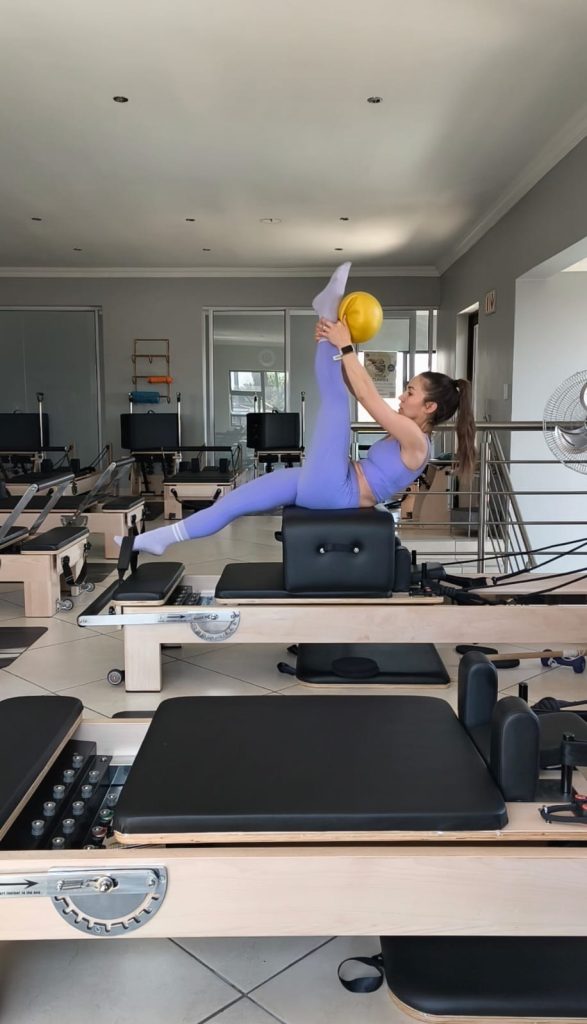
If your goal is to look better now and still move beautifully in 10–20 years, the question isn’t “What burns the most calories?”
It’s: What protects my joints, spine, hormones, and nervous system while building lean muscle?
At Pilates100, we don’t train for “more sweat.”
We train for strength + structure + longevity.
Because some popular training styles can improve short-term fitness while quietly increasing long-term wear and tear—especially when recovery is limited (busy moms, high stress, poor sleep, perimenopause, etc.).
Let’s break down the science.
“Aging” from training is often inflammation + joint stress + poor recovery
Aging is not just wrinkles. In the body, it often shows up as:
- persistent tightness and stiffness
- joint pain (hips, knees, shoulders, low back)
- loss of mobility and balance
- poor posture (forward head, rounded shoulders, rib flare)
- chronic fatigue / nervous system overdrive
- injuries that don’t fully heal
Training can either slow that down or speed it up, depending on how it affects:
✅ Your stress physiology (cortisol + sympathetic tone)
High-intensity work is not “bad.”
But high intensity plus high life stress plus poor recovery = a problem.
When the body stays in sympathetic dominance (fight-or-flight), you can see:
- poorer sleep quality
- slower tissue repair
- increased pain sensitivity
- higher resting tension (neck, jaw, hip flexors)
- cravings + appetite dysregulation
- more belly-fat storage over time (especially in stressed women)
Pilates is one of the few strength methods that builds muscular demand while also training parasympathetic tone through breath + control.
The real longevity targets: muscle, connective tissue, and the nervous system
If we’re being scientific, “anti-aging training” means you protect and improve:
A) Muscle mass + strength (for metabolism and independence)
After ~30, we naturally lose muscle if we don’t train it.
Muscle is not just aesthetic—it’s a metabolic and longevity organ.
Pilates strengthens through:
- controlled resistance (especially on reformer/chair)
- time under tension
- full-body integration (not just isolated “abs”)
- progressive patterns that respect alignment
B) Joint mechanics (alignment under load)
Many injuries don’t happen because someone is weak.
They happen because the body loads joints in poor positions repeatedly.
Pilates is basically joint mechanics training:
- scapula stability for shoulders
- hip centration for glute work
- spinal articulation + decompression
- rib/pelvis stacking to reduce lumbar compression
- control in rotation (huge for back health)
C) Fascia + connective tissue quality (elasticity and glide)
Fascia (connective tissue web) responds to:
- hydration
- varied movement
- elastic loading
- breath and pressure changes
- controlled lengthening under tension
Pilates uses:
- long-lever loading
- spring resistance with precision
- dynamic stretching inside strength
- multi-planar patterns (not only forward/back)
This supports that “youthful movement” look: lightness, fluidity, spring.
D) Nervous system regulation (pain + performance)
Pain is not purely “damage.”
The nervous system plays a major role in pain perception, guarding, and chronic tension.
Pilates trains:
- coordination
- proprioception (body awareness)
- controlled breathing
- precision and pacing
This reduces “protective gripping” patterns that often age the body: tight traps, clenched glutes, rigid lower back, locked ribs.
3) Why some workouts can feel effective—but cost you later
Here are the common patterns that look great on social media but can age the body if done excessively or without skill:
❌ Constant high-impact with poor alignment
Repeated joint impact + limited recovery can increase irritation (especially knees/hips/low back).
❌ “More reps, more burn” with rib flare and lumbar compression
A lot of ab workouts are actually hip flexor + lower back workouts in disguise.
❌ Overtraining + under-recovering
If your nervous system is already loaded, your body may respond with:
- inflammation
- plateau
- fatigue
- injury
- hormonal symptoms worsening
Pilates gives you a way to train intensely without crashing your system.
4) What “Pilates Longevity Training” looks like at Pilates100
We focus on 5 outcomes:
✅ Posture that holds (not just “good posture” in a photo)
✅ Deep core function (diaphragm + pelvic floor + transverse system)
✅ Glutes that support the spine (without building massive legs)
✅ Mobile shoulders + strong upper back
✅ A nervous system that can downshift after stress
This is the difference between:
“working out”
and building a body that lasts.
5) How to know if your training is aging you (quick self-check)
If your current workouts leave you with:
- frequent tight neck/upper traps
- cranky knees or hips
- low back tightness after core training
- needing caffeine just to function
- poor sleep after evening workouts
- constant soreness without progress
- a feeling of being “wired but tired”
…your body may be asking for a smarter method.
The bottom line
Longevity training is not about doing less.
It’s about doing better.
Pilates builds:
- strong muscle
- resilient joints
- elastic fascia
- better breathing
- a calm, capable nervous system
That’s what keeps you youthful—not only in how you look, but in how you move and feel.
Book This Week
If you want to train for strength + posture + anti-aging (without burning out), start here:
👉 Book a Pilates100 Longevity Assessment Session this week
We’ll assess your posture, core strategy, and movement patterns—and match you to the right class level.
Best starting options:
- Back Health Pilates (spine + core connection)
- Balance & Control (stability + posture)
- Stretch & Restore (mobility + nervous system reset)
- Reformer Foundations (strength with precision)
📩 DM “LONGEVITY” to book your first session or trial package.

